Car Crash Simulator
- 4.3
- Rating
- 1.00M
- Installs
- Free
- Price

 Analysis by App-foxy
I spent time with Car Crash Simulator as a quick, physics-focused racing game, and my first impression was clear: this is less about finishing a polished championship and more about enjoying the moment when an off-road car meets an awkward jump, a rough landing, or a badly judged turn. That difference matters. If you want a traditional racer built around clean laps, overtaking and long-term competition, this may feel limited. If you enjoy experimenting with vehicles, terrain and crashes in short sessions, it has a much more immediate appeal.
The game comes from HyperFusion Games and is free to install, with optional purchases ranging from $0.49 to $38.99 per item. It is listed for Everyone, so its basic presentation is easy to approach, and it runs on Android devices using version 7.0 or later. The current version is 79, while its release date was Dec 24, 2023. Those details make it accessible to a broad audience, but they do not change the main question: do you enjoy driving for the physical reaction of the car, rather than only for the result at the finish line?
How I settled into the driving loop
My baseline workflow was simple. I started by treating each run as a test rather than trying to drive perfectly from the first second. I watched how the car reacted when I approached uneven ground with too much speed, how much control I retained after a landing, and whether a correction made the vehicle stable or sent it into another obstacle. That mindset made the game more enjoyable than chasing an ideal line immediately.
You May Also Like

 Blood Strike: 2.5 Anniversary
Blood Strike’s Loadouts Turn Every Drop Into a Tactical Gamble
A close look at Blood Strike’s custom loadouts: how fast access to signature weapons reshapes its battle royale rhythm, rewards preparation, and narrows the gap between fights.

 Pandora - Music & Podcasts
Pandora’s Music Is Easy to Start, but Harder to Recover
Pandora’s strength is its low-effort path from a seed to a station. Its weak spot is how much confidence it asks you to place in connection, setup, and quiet recovery.

 8 Ball Pool
 Is Built on Rivalries, Rematches, and Routine
A close look at the rivalries, rematches, shared routines, and unanswered safety questions that turn a quick pool match into a persistent mobile community.

 Samsung Music
’s Quiet Strength Is Playing What You Already Own
Its reach comes less from spectacle than from dependable access to a personal library. That simplicity is both the app’s strongest retention engine and its ceiling.

 AccuWeather: Weather Radar
AccuWeather Review: A Quick, Clear Forecast for Everyday Decisions
For everyday plans, the best forecast is the one you can understand quickly. AccuWeather makes rain timing, radar, and local conditions easy to act on, with a few trade-offs.

 Hill Climb Racing
Why Hill Climb Racing Still Turns Crashes Into One More Run
A tiny car, a bumpy hill and one more upgrade: Hill Climb Racing keeps resurfacing because its simple chaos makes every near-miss feel personal.
More From Our News Desk



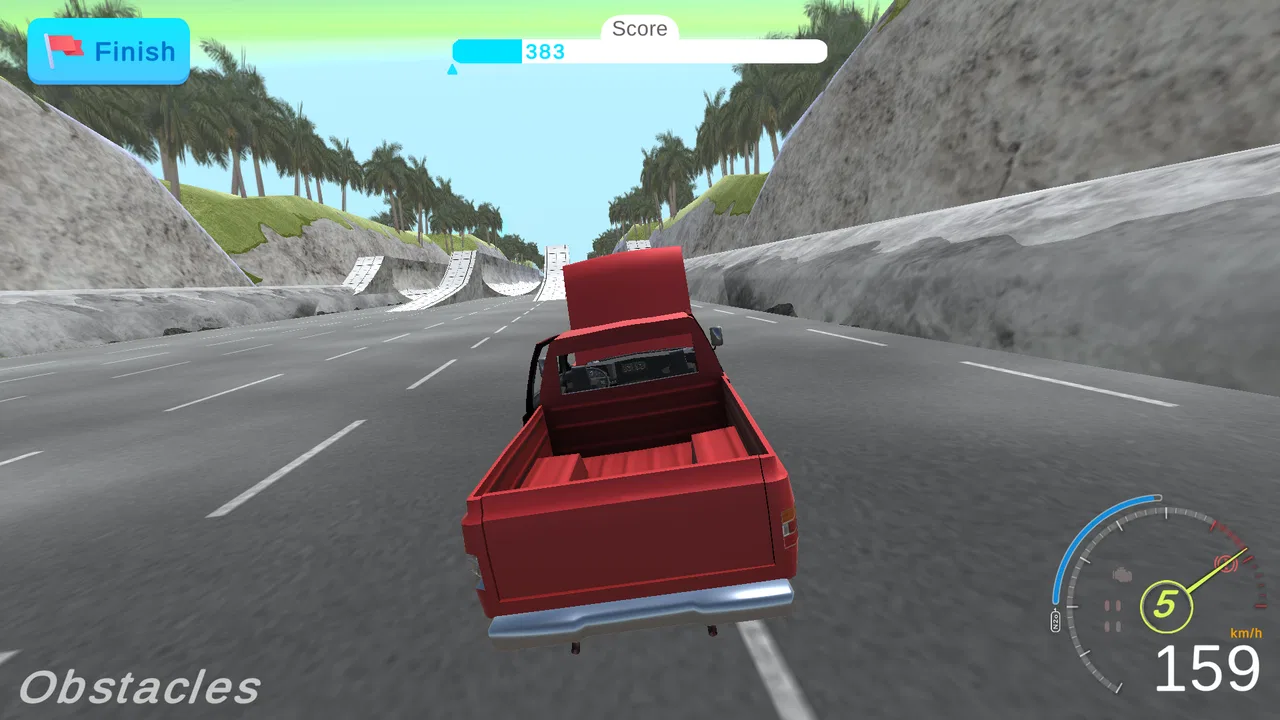
The off-road setting gives the driving a different rhythm from ordinary mobile racing games. On a smooth circuit, a mistake usually means losing time. Here, a mistake can become the most entertaining part of the attempt. A jump that looks manageable may end with the car tilted on its side, while a cautious approach can leave enough control to recover. I found myself paying attention to the shape of the terrain instead of staring only at the road ahead.
That makes the game especially suitable for short breaks. I could play for a few minutes, try a different approach to the same kind of obstacle, and stop without feeling that I had abandoned a long campaign. It also works well when you want something visually active but do not want to learn a complicated control system before having fun.
The important adjustment is to stop measuring every run by success or failure. A crash is not automatically wasted time in this game. It can reveal where your speed, angle or landing position went wrong. Once I used failed attempts as information, the driving became more deliberate. I began setting a small goal for each run, such as keeping the car level over a jump or entering a rough section with enough momentum to avoid getting stuck.
Controls and the feel of each attempt
I recommend beginning with gentle inputs. Holding a direction too aggressively can make a recovery harder, especially when the car is already airborne or bouncing across uneven ground. Short corrections are more useful than constant steering because they let you see how the vehicle responds before you commit to another movement.
A practical habit is to separate acceleration from recovery. When the car starts to lose balance, continuing to push forward may turn a small wobble into a full crash. Easing off briefly gives you a chance to understand the car's position. After the body settles, you can build speed again. This is not a flashy technique, but it is the kind of repeatable habit that makes the game feel less random.
I also found it helpful to use the first part of a run as a calibration pass. Instead of immediately attempting the largest jump, I checked how quickly the vehicle gathered momentum and how forgiving the landing felt. That gave me a reference for later attempts. The same approach helps if you switch between devices or return after a break: spend a moment relearning the car's response before blaming the course.
Settings and presentation worth checking first
Before settling into longer sessions, I would check the available control and display options on your device and inside the game. In a physics-heavy racer, comfort matters more than it does in a menu-driven game. If the steering feels too sensitive, a smaller, more controlled input style is usually better than trying to compensate with frantic movements. If the display feels crowded, reducing distractions where possible can make it easier to judge the next landing.
I would also pay attention to sound and device performance. Playing with audio at a comfortable level makes crashes feel more readable and gives the action more impact, but lowering it is sensible in public places. On an older phone, closing other demanding apps before starting a session is a practical step. The game supports Android 7.0 and later, but compatibility does not guarantee that every device will feel equally smooth. Physics games are particularly noticeable when performance becomes uneven during a jump or collision.
Another useful check is how the game behaves in your preferred orientation and grip. If you play with both thumbs, make sure your hands are not covering important areas of the screen. If you use one hand during a commute or while waiting somewhere, keep your expectations modest: the game is easier to enjoy when you can give the car enough attention to react to terrain changes.
I would not change every setting at once. Adjust one control or presentation option, play a few attempts, and decide whether the change actually helps. This prevents a common problem where a player changes several things, loses track of what improved the experience, and then assumes the game itself is inconsistent.
Patterns that make runs more reliable
Experienced play here is less about memorizing a perfect route and more about repeating a few useful patterns. The first is speed management before an obstacle. Arriving with maximum momentum may look exciting, but it often reduces your ability to correct the car after the jump. A slightly slower approach can produce a cleaner landing and keep the run alive.
The second pattern is to aim for stability rather than distance. When the car is airborne, the best outcome is not always the longest leap. A shorter landing with the vehicle facing forward is usually more valuable than a dramatic jump that leaves it sideways. This is a small change in priorities, but it helped me turn spectacular failures into controlled progress.
The third is to repeat a section immediately after learning from it. If I crashed because I entered a slope too quickly, I tried the same type of approach again while the mistake was still fresh. Waiting too long made it easier to forget the exact timing. Repetition is more useful when each attempt changes one decision instead of becoming a series of identical guesses.
There is also a good reason to leave a little room for recovery. Driving close to the edge of a surface may appear efficient, but it gives you fewer options when the vehicle bounces. A wider line can be faster overall because it prevents the small errors that force a complete restart. This is one of the trade-offs that separates casual crashing from more controlled off-road driving.
Using short sessions as practice
For an everyday scenario, imagine having ten minutes before an appointment. I would use the first run to warm up, the next few to focus on one obstacle type, and the final attempt to combine what worked. That structure is more rewarding than repeatedly restarting without a goal. It also keeps the game from feeling like an endless loop of random collisions.
Parents or younger players may appreciate the immediate action and Everyone rating, but I would still encourage simple boundaries around optional purchases. The game is free, yet in-app items can cost from $0.49 to $38.99 each. That range makes it sensible to review purchase controls on the device before handing it to a child. The rating describes the content, not how a player manages spending.
For commuters, the game is best when treated as a self-contained distraction rather than a serious competitive routine. Short attempts work well, while noisy surroundings, poor grip or an unreliable connection can make precise driving less pleasant. If you need a racer that rewards calm concentration over repeated resets, a conventional lap-based game may suit you better.
What the popularity tells me, and what it does not
The game has passed 1 million installs and holds a 4.2 average from around 8.2 thousand ratings, with 125 written reviews shown alongside it. That suggests a substantial audience has found the central crash-and-drive idea appealing. I would read those figures as evidence of interest, not as a guarantee that the physics will match everyone's taste. Some players want the freedom to experiment; others will find the lack of a more traditional racing focus repetitive.
The store summary emphasizes driving off a hill in an off-road car with advanced crash physics, and that is the right expectation to carry into a session. I would not approach it expecting the depth of a full racing simulator or the broad vehicle collection of a large console-style game. Its strongest identity is the immediate interaction between speed, terrain and impact.
Where the physics becomes a limitation
The same crash behavior that gives the game personality can also create frustration. When a vehicle tumbles, the result is entertaining at first, but repeated recoveries can make progress feel dependent on luck if you have not yet learned the terrain. Players who prefer precise, predictable handling may find this less satisfying than a game with clearer grip, braking and racing lines.
There is also a natural ceiling to the experience. Once you understand the main approach patterns, the novelty depends on how much you enjoy repeating experiments. If your ideal racing game includes structured events, detailed tuning, online competition or a long career, this is probably not the right choice. A conventional arcade racer will offer clearer goals, while a serious simulator will provide more deliberate vehicle control.
I would also avoid judging the game solely by its most dramatic crashes. Big impacts are memorable, but they do not necessarily represent good driving. The more interesting challenge is learning when to preserve momentum, when to slow down and when to accept a smaller jump. If you only chase the largest possible collision, the gameplay can become shallow quickly.
Free access is helpful, but the presence of optional purchases means I would keep an eye on the spending side of the experience. A player who dislikes any in-game purchase prompts may prefer a paid racing title with a simpler cost structure. On the other hand, someone who wants to try the core driving without paying first has a low-risk entry point, provided purchases are handled carefully.
Who should install it
I think it is a good fit for players who enjoy off-road driving, physics experiments and short, repeatable challenges. It is especially appealing if you like discovering how a car reacts to a bad landing and then trying to improve the next attempt. The free entry, broad age rating and modest Android requirement also make it easy to test on an older compatible phone.
I would skip it if your main goal is clean competition against other racers, realistic track strategy or a deep progression system. It is also not my first recommendation for someone who becomes frustrated when a run ends because of an awkward bounce. In that case, a more conventional racing game with predictable surfaces and clearer braking feedback will probably feel fairer.
Players who enjoy recording or sharing spectacular moments may find the crash-focused design naturally entertaining, but I would not use that as the only reason to keep playing. The game has more staying power when you turn each crash into a lesson. Try changing one variable at a time: approach speed, steering correction or landing angle. That turns simple destruction into a small driving puzzle.
My verdict after learning its rhythm
After adjusting to its priorities, I found Car Crash Simulator easy to pick up and surprisingly enjoyable in short bursts. Its best moments come from the combination of rough terrain and immediate vehicle reactions, not from a complex racing structure. I liked that a failed attempt could still teach me something, especially when I repeated the same section with a calmer approach.
My main advice is to start slowly, check the controls, keep inputs measured and treat the first few runs as practice. Do not chase maximum speed before you understand how the car lands. Use wider lines when you need recovery space, and repeat a troublesome obstacle while the cause of the crash is still clear in your mind. Those habits make the experience more consistent without pretending that every collision can be perfectly controlled.
The right way to judge this game is by the quality of its driving experiments, not by whether every run ends cleanly. For a free racing game centered on off-road crashes, it delivers an accessible, focused distraction. It is not a replacement for a full simulator or a competitive racer, and its repetition may eventually test your patience. But if you want a quick Android game where a rough hill, a little momentum and one poor decision can create an entertaining challenge, I think it is worth trying.
HyperFusion Games has shaped the experience around a very specific kind of fun: learning just enough control to make the next crash more interesting. That focus will not suit everyone, but it gives the game a clear identity. I would recommend it to curious casual players and physics-game fans, while steering serious racing enthusiasts toward a more structured alternative.
With over a million installs and an average of 4.2, Car Crash Simulator has clearly found an audience for its straightforward idea. My own recommendation is conditional but positive: install it when you want quick off-road action, keep purchase controls in mind, and give yourself a few attempts to learn the vehicle instead of expecting a polished lap racer. Once you accept that the crash is part of the lesson, the game becomes much more enjoyable.
FAQs for Car Crash Simulator
01What is Car Crash Simulator?
Car Crash Simulator is a dynamic mobile game designed for both Android and iOS, allowing players to engage in realistic vehicular destruction. The game offers a wide range of cars and environments where users can test various crash scenarios, providing a fun and educational experience on vehicle dynamics and safety.
02How does the gameplay work in Car Crash Simulator?
The gameplay involves selecting a vehicle, choosing an environment, and simulating crashes. Players can adjust speed, angles, and other variables to see how different factors affect the outcome of a crash. The realistic physics engine ensures that each crash is unique and provides insights into the mechanics of vehicle destruction.
03Are there any in-app purchases?
Yes, Car Crash Simulator offers in-app purchases. These include additional vehicles, environments, and customization options. While the basic version of the game is free, purchasing these extras can enhance the gameplay experience by providing more variety and detailed crash simulations.
04Is Car Crash Simulator suitable for all ages?
Car Crash Simulator is designed for a wide range of audiences, but it may not be suitable for younger children due to the realistic depiction of vehicle crashes. Parents should review the game content to ensure it aligns with their family's preferences and discuss the educational aspects of the game with their children.
05What are the system requirements for Car Crash Simulator?
For optimal performance, Car Crash Simulator requires Android devices running version 5.0 or higher, and iOS devices with iOS 11.0 or later. It is recommended to have at least 2GB of RAM for smooth gameplay. Ensure there is adequate storage space available to accommodate regular updates and new content.
Pros
- Realistic crash physics enhance immersion.
- Wide variety of vehicles to choose from.
- Intuitive controls for easy gameplay.
- Detailed graphics with dynamic environments.
- Regular updates with new features.
Cons
- Can be resource-intensive on older devices.
- Limited customization options for vehicles.
- Ads can be intrusive during gameplay.
- Occasional lag in multiplayer mode.
- Sound effects could be more diverse.

Car Crash Simulator
Gallery